Lava Zones, Explained: What They Mean for Big Island Property
Every buyer who's serious about Hawaiʻi Island asks about lava eventually. Usually it comes out sideways — "is that area, you know, safe?" — and the honest answer is that "safe" is the wrong frame. The right frame is a map the U.S. Geological Survey drew in 1992, and once you can read it, a lot of this island's pricing, insurance, and lending suddenly makes sense.
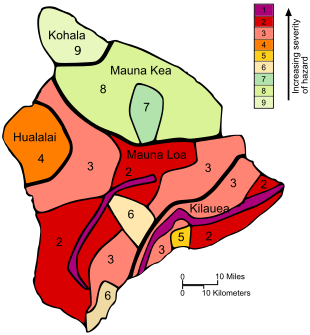
The map sorts the entire island into nine lava-flow hazard zones, numbered 1 to 9. Zone 1 is the most hazardous; Zone 9 is the least. The rankings are based on how often lava has actually covered each area in the geologic past and how close it sits to active rift zones and summits. It is not a prediction that your house will burn next year. It's a long-run probability, and it's the single most useful thing a Big Island buyer or seller can understand.
What the numbers actually mean
A few zones do most of the work in real conversations:
- Zones 1 and 2 cover the summits and active rift zones of Kīlauea and Mauna Loa, and the land right beside them. These are the areas with the highest probability of future flows — parts of lower Puna and the Kaʻū district sit here. Since 1800, large fractions of Zone 1 and 2 land have been resurfaced by lava.
- Zone 3 is still gradational with 2 but meaningfully lower hazard. A lot of Puna — including big subdivisions like Hawaiian Paradise Park and parts of the Hilo side — falls in Zone 3.
- Zones 4 through 6 step the risk down further. Hualālai, the volcano above Kailua-Kona, puts much of the Kona coast in Zone 4 — active in geologic terms but with long dormancy.
- Zones 7, 8, and 9 are the low-hazard end. The Kohala district, on the island's old extinct volcano, is largely Zone 9 — about as far from a lava conversation as you can get on Hawaiʻi Island.
So when someone says a home is "in Puna," that tells you almost nothing by itself. A house in Hawaiian Paradise Park (Zone 3) and a house in Leilani Estates (Zone 1, and the heart of the 2018 eruption) are both "Puna," and they live in completely different financial universes.
Why the zone is really an insurance question
Here's where the map stops being trivia. In Lava Zones 1 and 2, the standard insurance carriers — the names you'd recognize — generally won't write a new homeowner's policy. The fallback is the Hawaiʻi Property Insurance Association, or HPIA, a carrier the state legislature created back in 1991 specifically so that lava-zone homes could get covered at all.
HPIA works, but it comes with real constraints. Coverage is capped (the dwelling limit tops out in the mid-hundreds of thousands), and the premiums are a different animal — for a modest home in Zone 2 you can be looking at something in the neighborhood of $6,000 a year, where the same house up in Zone 3 might insure for closer to $1,400. Those are ballpark figures that move with the market, but the ratio is the point: the zone can multiply your insurance cost several times over.
This has knock-on effects most buyers don't see coming. A mortgage lender requires hazard insurance equal to the replacement cost of the home. If the only available coverage (HPIA) is capped below what it would cost to rebuild, you can end up unable to satisfy the lender — which is a big reason Zone 1 and parts of Zone 2 trade heavily in cash. Financing isn't impossible there, but it's harder, slower, and narrower, and that thins the buyer pool, which shows up in the price.
How it shows up in value and marketing
None of this makes lava-zone property "bad." Some of the most beautiful, affordable land on the island is in higher-hazard zones, and people buy it with eyes open every day — for the acreage, the privacy, the price per square foot you simply can't find in Waimea or Kohala. What the zone does is shape how a property sells:
- Price reflects it. Buyers (and their lenders and insurers) price the zone in. A seller who ignores it and prices like a Zone 8 home will sit on the market.
- Disclosure is non-negotiable. Hawaiʻi sellers disclose what they know, and the lava zone is a material fact. Get ahead of it. A buyer who learns the zone from their insurer mid-escrow gets nervous; a buyer who learned it from your listing came in prepared.
- The buyer often needs educating. A lot of higher-zone buyers are from off-island and have never thought about catchment, HPIA, or cash-only comps. Part of selling well in Puna or Kaʻū is answering those questions fast and accurately, so a serious buyer never waits on an answer.
The 2018 eruption, and keeping perspective
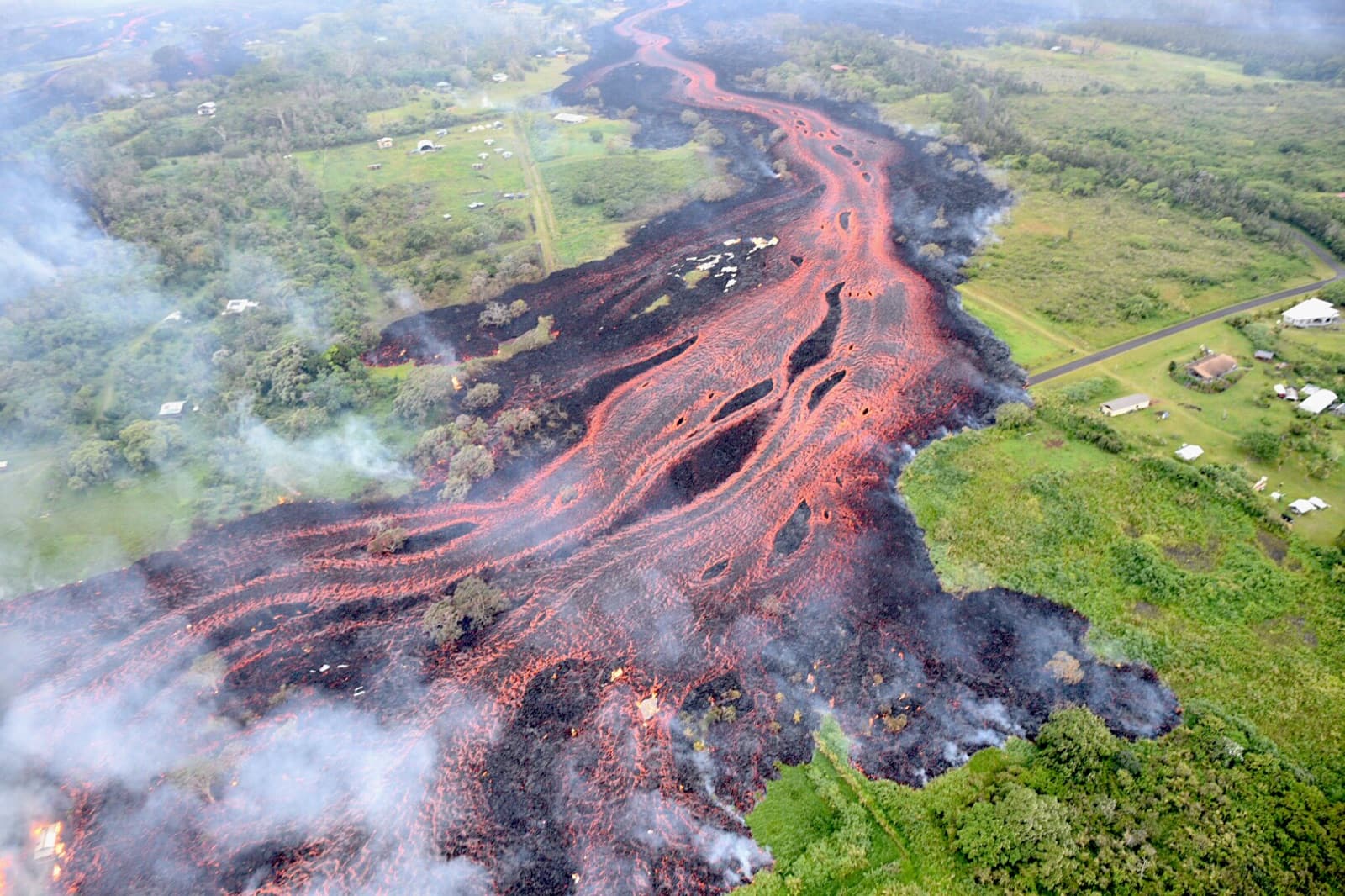
It's worth saying plainly: in 2018, the lower East Rift Zone of Kīlauea opened up in and around Leilani Estates, and lava destroyed something on the order of 700 structures before it stopped. That was Zone 1 doing exactly what Zone 1 is mapped to do. Anyone telling you the hazard is theoretical hasn't been paying attention.
And — at the same time — the overwhelming majority of Hawaiʻi Island, including almost all of where people actually buy and sell, sits in Zones 3 and lower, where the practical risk over a normal ownership horizon is genuinely small and the insurance market functions normally. Both things are true. The map lets you hold them at once instead of reacting to the word "lava" with either panic or denial.
How to find a property's zone
You don't have to guess. The USGS map is public, the County of Hawaiʻi ties hazard data to parcels, and any property's zone can be looked up from its Tax Map Key. When we take a listing, the lava zone is one of the first things we pull and put in front of buyers — it belongs in the listing, not in a surprise email three weeks into escrow. If you're a buyer, ask for the zone in writing before you fall in love, and price your insurance early, because in the higher zones the insurance quote can change what you can afford.
If you're trying to understand a specific area, our district guide for Puna goes deeper on how hazard, water, and price interact there, and you can always ask us about a particular listing or neighborhood. And if you're a seller in a higher zone, it's the same full MLS exposure as anywhere else on the island; see what listing with us looks like.
General information for Hawaiʻi Island buyers and sellers, not insurance or legal advice. Lava-zone boundaries, HPIA coverage terms, and premiums change — confirm specifics with the USGS, the County of Hawaiʻi, and a licensed Hawaiʻi insurance agent.
Keep reading
Buying
Kauaʻi's Vacation-Rental Rules: TVRs, the VDA, and Resale Value
On Kauaʻi, whether a home can legally rent nightly comes down to one map and one certificate. Here's what the VDA and a TVR permit mean for price — and how to verify before you buy.
Selling
Hawaiʻi Island Property Taxes: Classes, the Homeowner Exemption, and What Changes at Closing
Big Island property tax is low — and almost nobody understands why their neighbor pays a fraction of what they do. It comes down to class and the homeowner exemption, and both change when you sell.